
We use your details only to answer your request, and we never sell or share your phone number. See our Privacy Policy and Terms of Service.
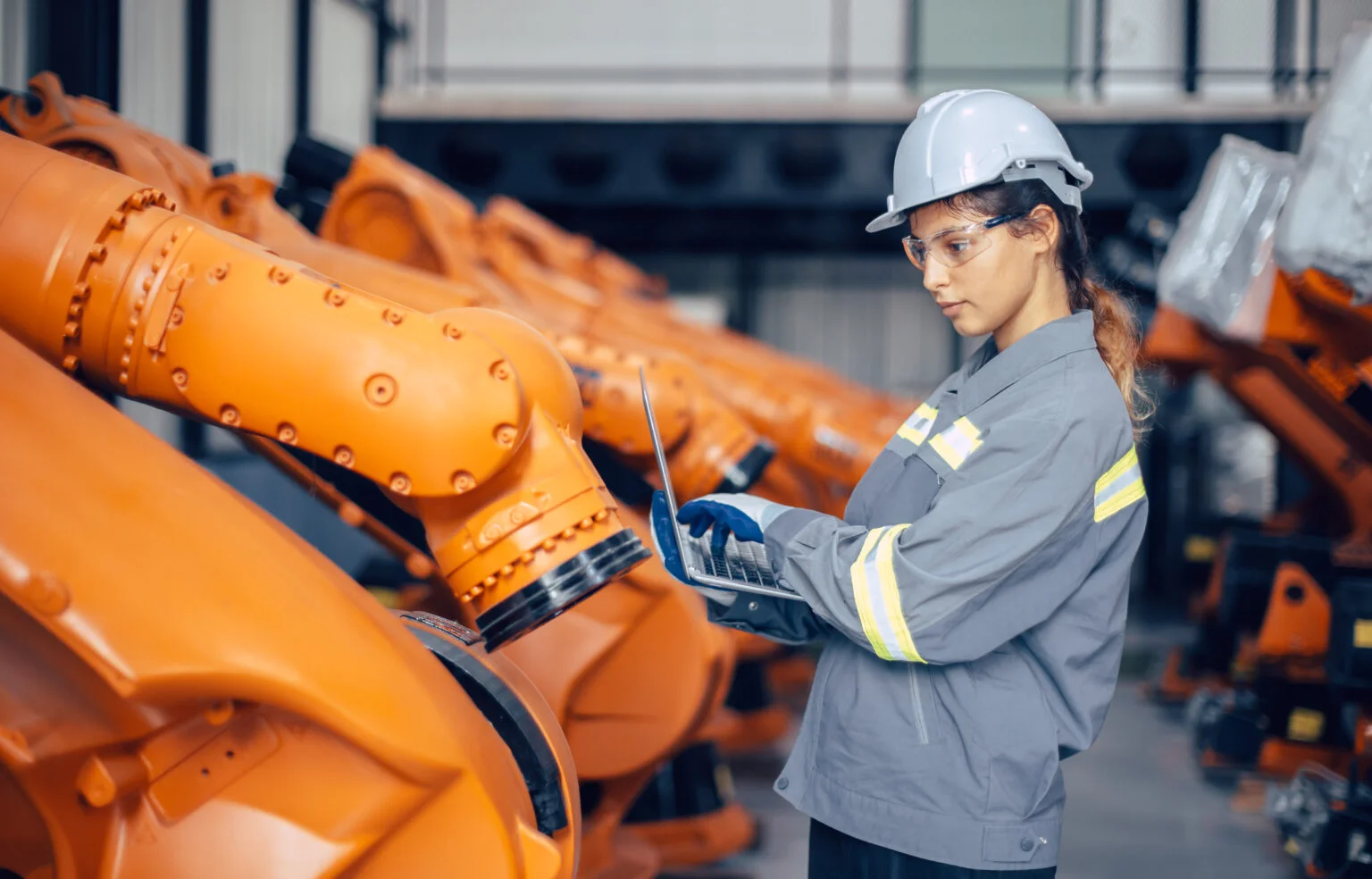
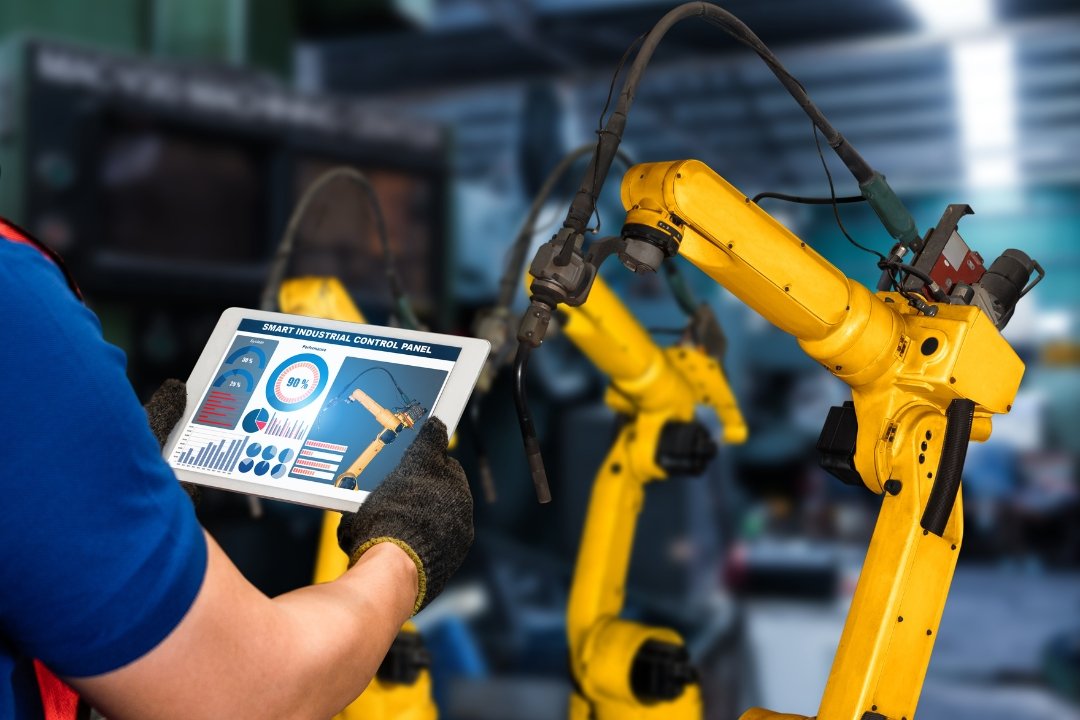
Fund your robotics integration through measurable operational improvements—turning your savings directly into repayment, with no heavy initial investments.










+1 602-449-1556
+1 602-449-1556
hello@roboticsintegration.com
We use your details only to answer your request, and we never sell or share your phone number. See our Privacy Policy and Terms of Service.
Manufacturing employed about 47,400 people in the Greensboro-High Point metro in the three months ending October 2024, roughly 13% of nonfarm payroll jobs. It remains one of the region’s four largest industry sectors, and together with health care and retail trade it accounted for 165,133 of 454,042 regional jobs in 2022.
The metro’s manufacturing base includes automotive, aerospace/aviation, and transportation/logistics clusters, with approximately 5,844 automotive jobs, 2,384 aerospace/aviation jobs, and 1,241 transportation/logistics jobs. Furniture manufacturing, plastics and rubber production, and metal fabrication are each specialized industries in the Greensboro-High Point area. The broader Triad innovation corridor is also home to publicly identified pharmaceutical manufacturers, including Thermo Fisher Scientific, Mayne Pharma, and the maker of Dyneema products, as the regional base diversifies into innovative and aerospace manufacturing.
Piedmont Triad International Airport supports regional aviation and air-cargo activity. Interstate corridors I-40, I-73, I-74, and I-85, along with major rail freight infrastructure, connect distribution centers and warehouses across the Piedmont Triad manufacturing and logistics network rather than a single industrial district.
Automotive plants and suppliers are strong candidates for robotic welding, spot welding, machine tending, screwdriving, assembly, inspection, material handling, and palletizing, typically using mid-to-heavy payload articulated arms. Aerospace and aviation manufacturers can apply robotic machine tending, precision assembly, dispensing, sanding or finishing, and inspection, adapted to high-mix production and traceability requirements.
Furniture manufacturers use robotic sanding, finishing, routing, drilling, cutting, adhesive application, and palletizing cells. Plastics and rubber operations apply robots to injection-molding machine tending, part removal, trimming, inspection, and packaging. Metal fabricators rely on robotic MIG or TIG welding, plasma or laser tending, bending-cell loading, deburring, and grinding.
Pharmaceutical and life-sciences plants can use robotic packaging, case packing, palletizing, lab or material handling, and vision inspection, subject to cleanroom and validation requirements. Food and beverage producers apply robotic pick-and-place, primary and secondary packaging, case packing, palletizing, and depalletizing. Logistics and distribution operations use robotics for parcel handling, sortation, palletizing, depalletizing, and warehouse material movement.
North Carolina operates an OSHA-approved State Plan through the North Carolina Department of Labor’s Occupational Safety and Health Division, which covers private-sector employers in Greensboro. Robot cell design and risk assessment should reference ISO 10218 for industrial robot safety and the RIA R15.06 standard.
North Carolina’s Customized Training Program, administered through the North Carolina Community College System, supports training for eligible new, expanding, and existing businesses. Guilford Technical Community College is the local partner for coordinating this support in the Greensboro area and offers corporate learning services relevant to automation training. North Carolina Department of Commerce Workforce Grants connect employers with additional training resources.
Before an automation assessment, gather part drawings, cycle time targets, current and projected volumes, floor space dimensions, and available utilities, including compressed air and electrical service. Note any high-mix production requirements or traceability rules that apply to your sector.
The region’s community-college infrastructure, including Guilford Technical Community College, supports training in industrial maintenance, mechatronics, robotics, controls, and welding. Typical project phases include application assessment, cell design, safety review against ISO 10218 and RIA R15.06, installation, commissioning, and operator training.
We also serve Robotics Integration in Greenville, Robotics Integration in Dallas-Fort Worth, Robotics Integration in Austin, Robotics Integration in Houston and Robotics Integration in San Antonio — or browse all service areas.

602-449-1556


