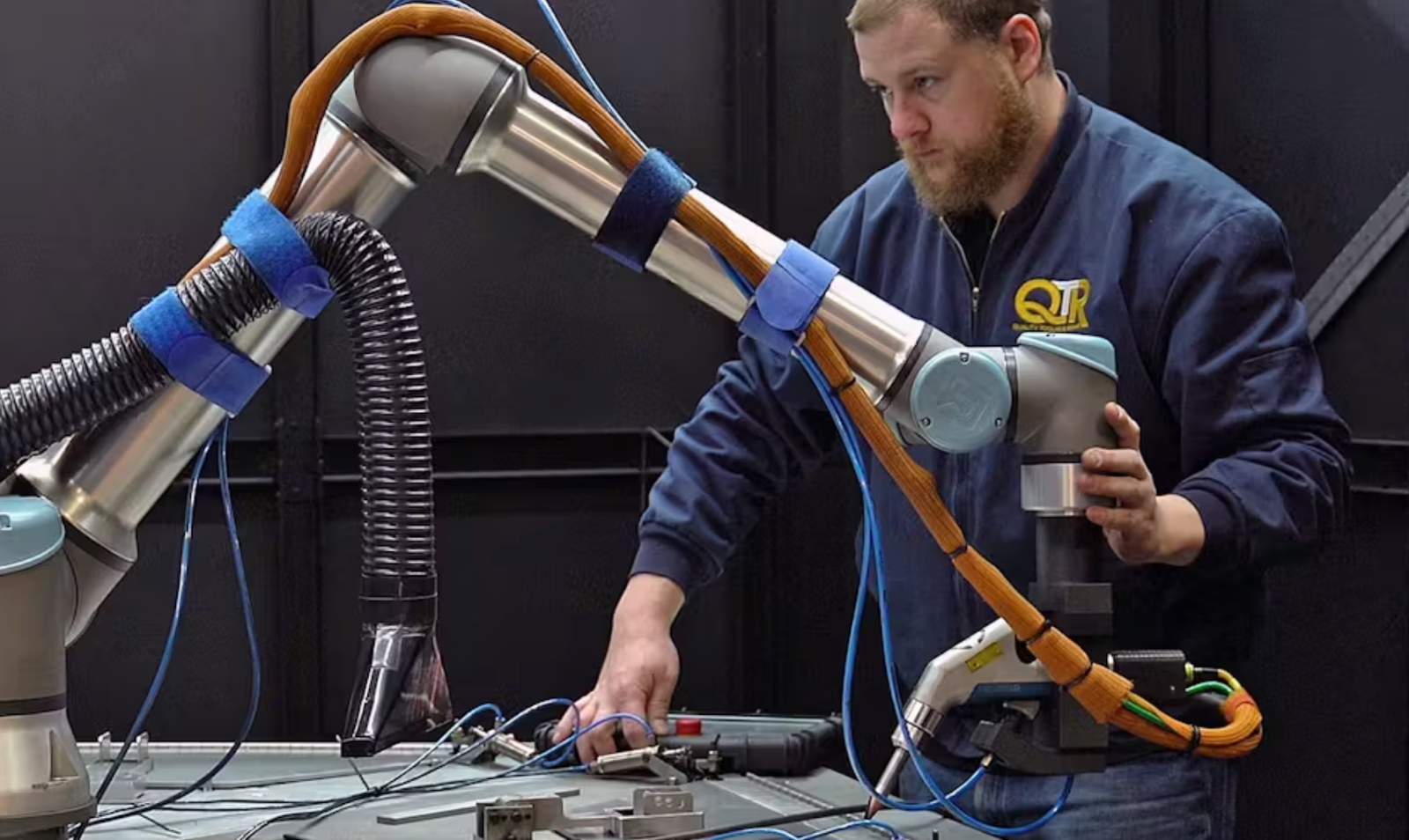
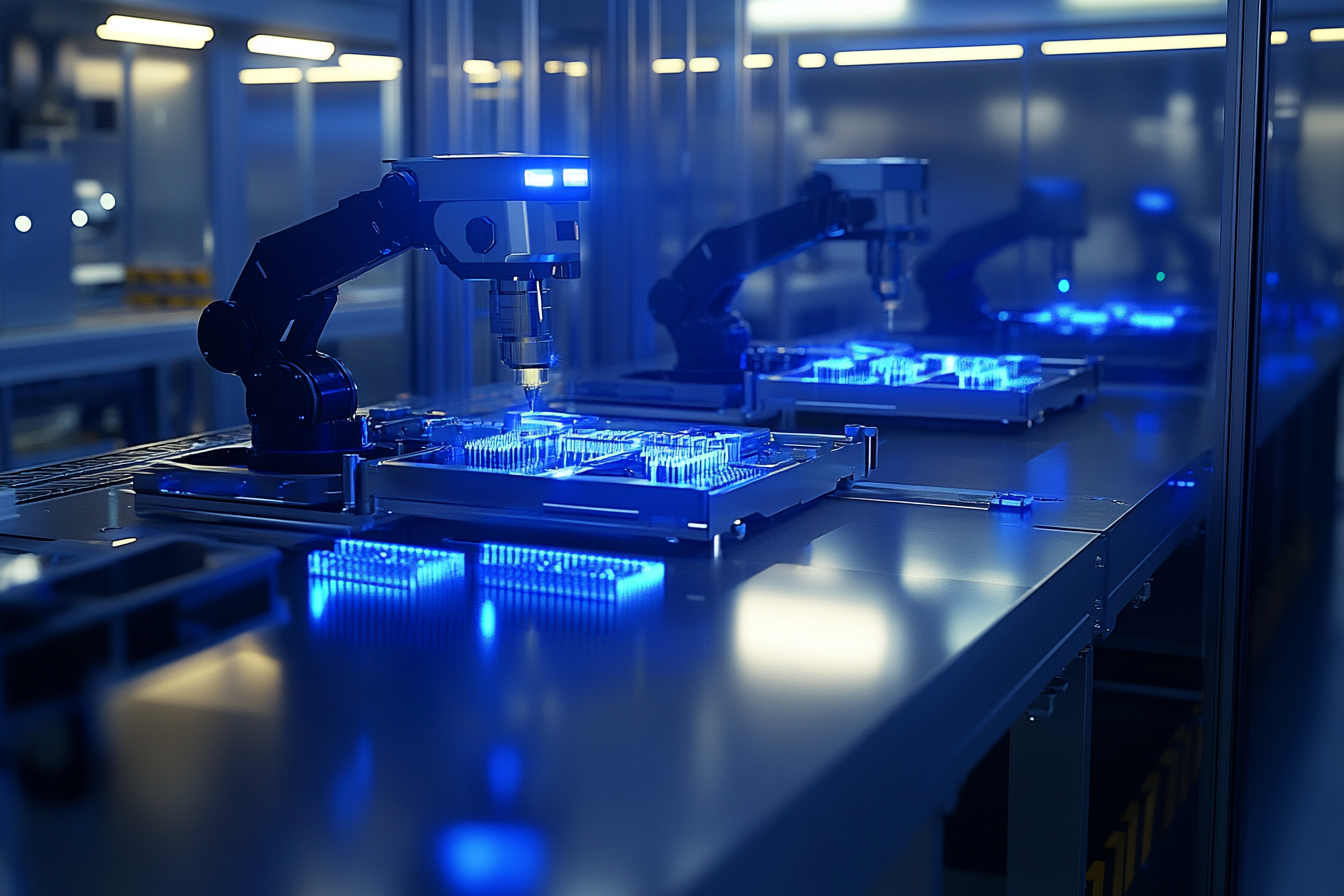
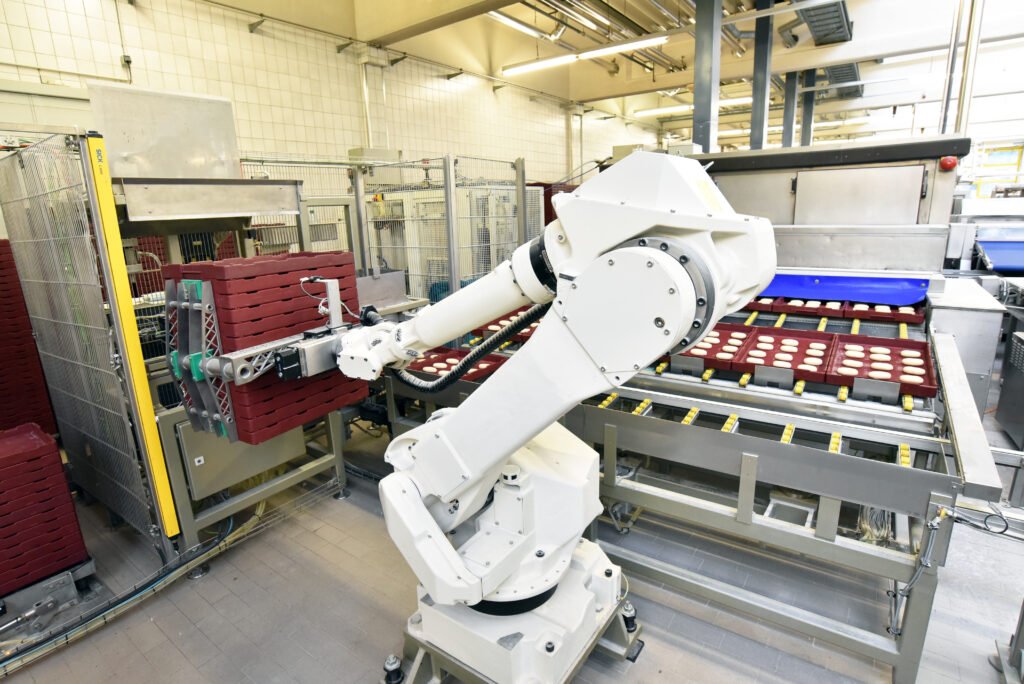
Manual assembly stations create variation—operators tire, grip force drifts, and cycle times drift with them. A robotic assembly system combines the robot, end-of-arm tooling, part presentation, sensors, and safety controls into one repeatable process for joining, fastening, insertion, dispensing, or inspection. We build these systems so torque, position, and force stay within spec run after run, not just on the first shift.
Every assembly process has its own failure modes, so the cell has to be built around the actual process, not a generic robot arm. Applications we integrate include:
Screwdriving – robot, screw feeder, spindle, torque/angle monitoring, bit-change stations, and a presence check
Press-fit assembly – controlled force, displacement, speed, and alignment, with force-displacement signatures flagging missing or misaligned parts
Adhesive and gasket dispensing – selected against viscosity, bead size, shot-volume tolerance, and cure method
Clip and connector insertion, pick-and-place, and inline vision inspection
Part presentation — trays, bowl feeders, step feeders, or kitted bins — gets chosen based on part geometry and changeover frequency, not convenience.
Automating assembly changes more than labor cost:
Cycle time measured across the full sequence — pick, transfer, insertion, inspection, release — not just robot travel time
Higher first-pass yield from consistent torque, force, and placement
Traceability data logged at every station, not just at final inspection
Faster changeover between SKUs without retraining operators
Operators moved out of pinch points, ejected-part zones, and repetitive strain tasks
We size these systems the same way whether it’s one cell or a multi-station line.
Our integration process runs through requirements definition, process observation, cycle-time and takt analysis, component validation, concept design, risk assessment, offline simulation, prototype trials, detailed engineering, build, factory acceptance testing, installation, site acceptance testing, training, and production support. Skipping steps is where most assembly cells fail later.
Robot selection depends on the actual payload — workpiece, gripper, adapters, cables — not the spec sheet number alone. A FANUC LR Mate 200iD (7 kg payload, 717 mm reach, ±0.01 mm repeatability) covers a lot of small-part work; the LR Mate 200iD/14L steps up to 14 kg for heavier fixtures at the same 911 mm reach.
Beyond the robot, we handle:
Gripper selection — electric for controlled handling, pneumatic where speed matters more than force precision
Tool changers with mechanical locking and tool-presence sensing for multi-tool cells
Safety design to ISO 10218-1/-2, ANSI/RIA R15.06, and applicable ANSI B11 requirements
PLC/HMI programming, vision integration, and conveyor/feeder tie-in
Explore Robotic Dispensing Systems Integration, Robotic Deburring & Finishing, Robotic Painting & Coating, Robotic Welding Integration Services and Autonomous Mobile Robots (AMRs) Integration. See all Manufacturing & Process Automation Services solutions. Already running equipment? Our assembly robot maintenance team keeps it in service.
Tolerances, part sensitivity, and volume requirements differ enough between industries that the same cell design rarely transfers as-is. Automotive Tier 1 lines need takt-time discipline; electronics and consumer goods need fast changeover on small parts; medical device work needs documented process control and traceability. We design each assembly system around the sector’s actual constraints.
Automotive and Tier 1 assembly work typically covers screwdriving, clip and bushing insertion, adhesive or sealant dispensing, press fitting, connector insertion, palletized assembly, and end-of-line dimensional or presence checks. Dashboard modules, fuel system components, and EV battery packs each bring their own fixturing and force-control requirements. We build these cells to hold takt time and integrate with existing conveyor and PLC infrastructure rather than requiring a line rebuild.
Electronics, plastics, and consumer-goods assembly leans on small-part handling, connector insertion, adhesive dispensing, screwdriving, and flexible feeding — often with camera-guided placement for parts that arrive unsorted. Traceability by lot or serial number and fast changeover between SKUs matter as much as cycle time here. Our robotic assembly integrators size grippers and vision systems around the smallest feature that has to be measured, not the camera’s pixel count.
Medical device and micro-assembly work — syringes, test kits, surgical instruments, wearables — runs on validated recipes, controlled process parameters, and lot traceability, with cleanroom-compatible equipment where the spec calls for it. Documented inspection and change control aren’t optional add-ons; they’re part of the build from day one.
If manual stations are still handling complex or high-volume builds, that’s where cycle time and defects pile up. A single-station proof of concept can run weeks; a multi-station line typically takes several months from requirements freeze to site acceptance. Either way, we scope it against your actual parts and takt time first.
Ready to talk through your line? Let’s start there.
We use your details only to answer your request, and we never sell or share your phone number. See our Privacy Policy and Terms of Service.
+1 602-449-1556
602-449-1556