We design vision & inspection systems integration for fast, smart quality checks on the factory floor. Our machine vision systems help robots find defects, measure parts, and track products in real time. With our automated inspection solutions, your line stays accurate, fast, and ready for any production demand.
Machine Vision in Robotic Inspection: An Introduction
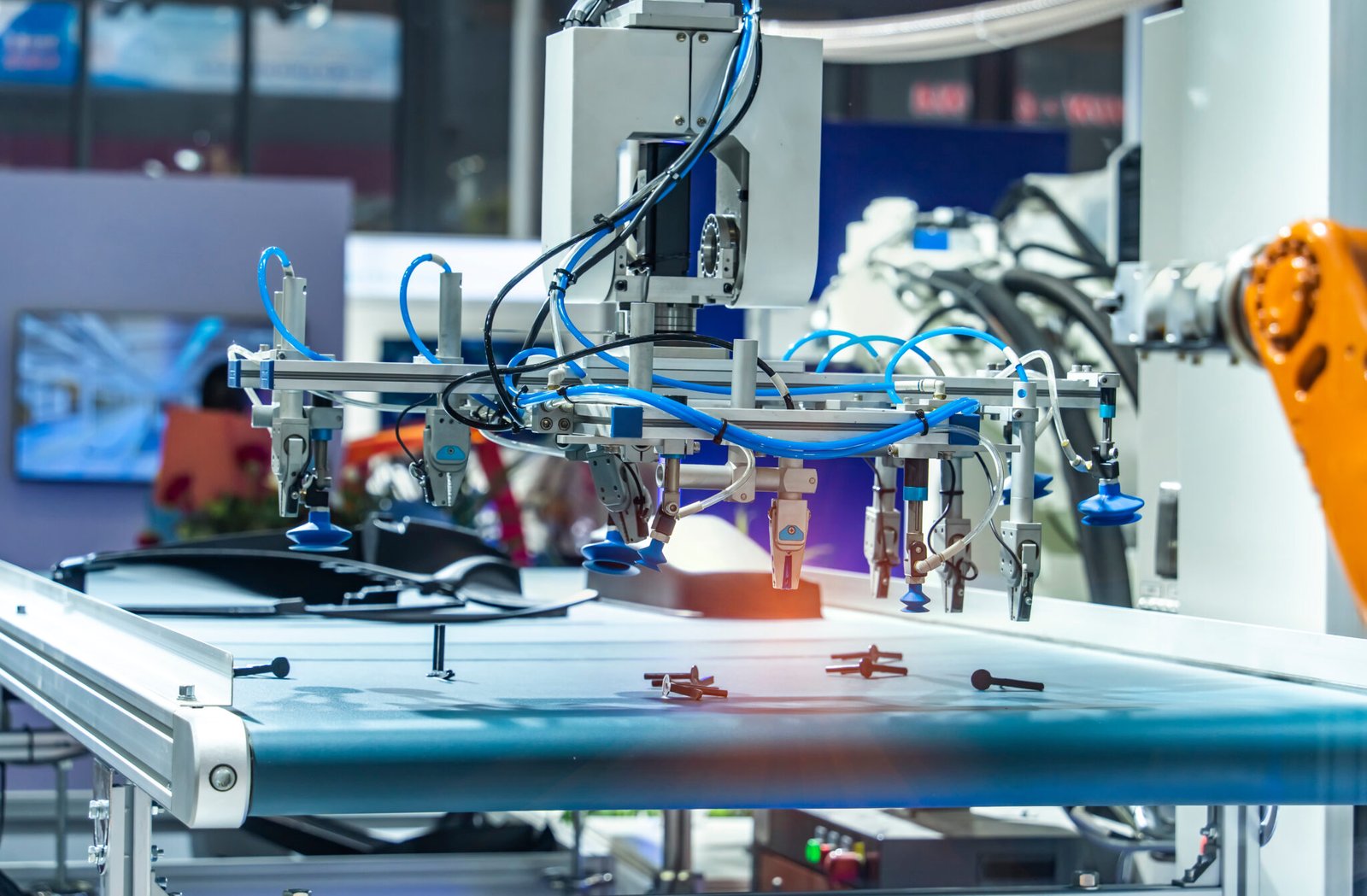
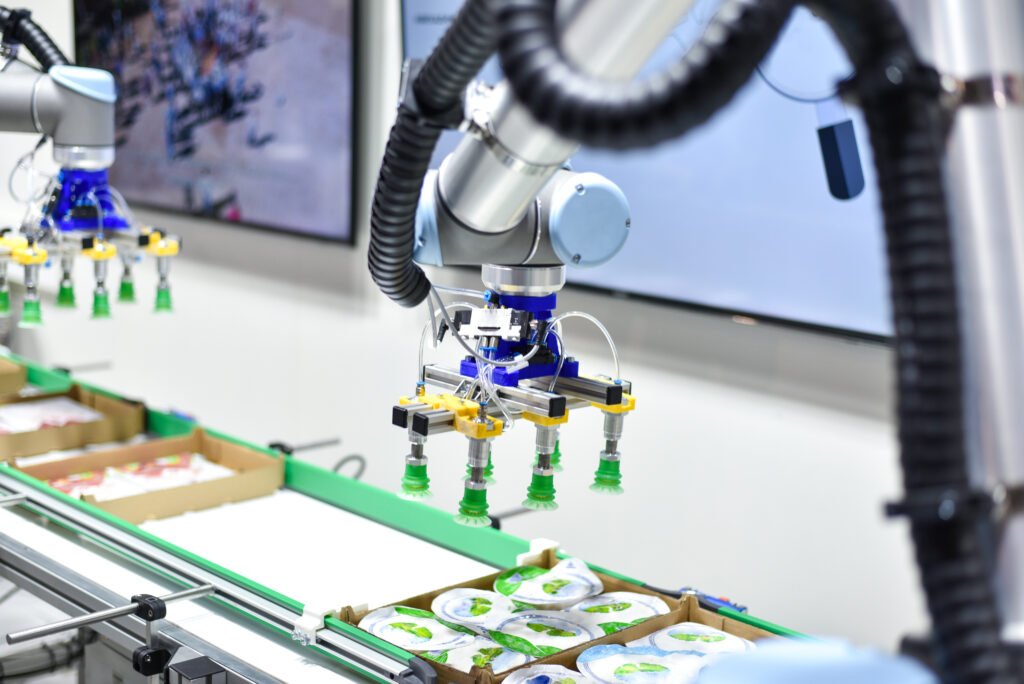
A vision-guided inspection cell isn’t just a camera bolted to a robot. It’s a coordinated system: camera or 3D sensor, lighting, optics, image-processing software, a robot controller interface, part-present sensors, calibrated robot-to-camera coordinates, and a reject or disposition mechanism. Miss one of these and the rest of the system is guessing.
FANUC’s iRVision runs integrated 2D and 3D guidance directly from the robot controller—no separate PC required—which simplifies wiring and reduces points of failure on the floor. OMRON FH vision controllers add encoder input and dual Ethernet ports, useful when you need conveyor tracking or synchronized image acquisition across multiple stations.
We build these systems to match your defect definitions and tolerances, not a generic spec sheet.
Automated Vision Inspection Systems for Quality Control
Whether you’re inspecting molded plastics, machined metal parts, electronic assemblies, or packaged goods, the inspection task drives the hardware—not the other way around. Camera resolution, lens selection, and lighting geometry all get set by the smallest defect you need to catch, the field of view, working distance, and your measurement tolerance. A high pixel count camera paired with poor lighting will still miss cracks and scratches.
We integrate cameras, lighting, optics, and processing software to handle:
These systems tie into robotic cells, conveyors, or standalone inspection stations, with disposition logic that routes rejects without stopping the line.
Benefits of Vision-Guided Robotics in Manufacturing
Vision-guided robotics solves problems fixed tooling can’t handle. Here’s what we typically build for clients:
Random Bin Picking – A camera locates parts in an unordered bin so a robot such as the FANUC M-20iD/35 (35 kg payload, ±0.03 mm repeatability) can pick without fixed presentation
Auto-Adjustment – The system recalculates pick or inspection coordinates when part position shifts, instead of relying on hard tooling
No-Fixture Inspections – Parts are measured and located by vision, cutting fixture cost and changeover time
High-Speed Sorting – Robots pull defects off the line based on inspection results without stopping production
Closed-Loop Feedback – Measured data feeds back into upstream process parameters to reduce recurring defects instead of just catching them
All of this depends on robot-to-camera calibration. Get that wrong and you get position-dependent pick offsets, not random ones.
Our Vision System Integration Expertise
Vision integration is where robotics systems integration gets unforgiving—optics, lighting, robot kinematics, and software all have to agree on the same coordinate frame. We don’t drop in off-the-shelf cameras and hope for the best. We run a defined sequence: requirements definition, sample and defect study, camera-and-lighting feasibility testing, robot and end-effector selection, mechanical and electrical design, controls and communications development, calibration, validation against known-good and known-defective samples, operator training, and commissioning.
Our expertise includes:
Multi-camera and 3D imaging integration, including FANUC iRVision and OMRON FH platforms
Optical component selection and mounting (lens, filter, lighting) matched to feature size and tolerance
Image processing software—rule-based and deep learning
Robot-vision calibration and hand-eye coordination, so pick and inspection coordinates stay accurate part to part
Part tracking across cells using barcode and vision-based ID
End-of-arm tooling designed to preserve the camera-to-TCP relationship, with mounting per ISO 9409-1
Data reporting—status, measured values, error codes, and disposition—back to your MES/ERP or cell controller
We’ve deployed inspection cells on compact platforms like the FANUC LR Mate 200iD/4S for small-part work and larger reach robots like the M-710iC/20L for bigger components, in cleanroom assembly and heavy metal processing alike. Robot cell safety follows ISO 10218-1/-2 and, where applicable, ANSI/RIA R15.06.
Our team scopes the inspection task first—defect definition, tolerance, throughput—before we spec a camera or robot. Whether you’re launching a new line, replacing manual QC, or pushing throughput past what your current cell can handle, we handle the integration end to end.
Request a consultation today.
We’ll tell you upfront if vision-guided robotics is the right fit for your process, and what it will take to get there.
Talk A Robotics Integrator
We use your details only to answer your request, and we never sell or share your phone number. See our Privacy Policy and Terms of Service.
Success Stories: See What Business Have To Say About Robotics Integration
4.7 Customer Reviews
Working with Robotics Integration on our cobot implementation was exceptional. Their detailed training, expert guidance, and responsive support significantly enhanced our facility's safety and efficiency.
Jim R.Owner
Needed SCARA robots for assembly, and Robotics Integration quickly helped me find an RI in my area. The process was smooth, and our productivity skyrocketed—couldn't be happier!
Michael B.Operations Officer
Since integrating robotics, we've seen huge gains in throughput and cycle time reduction. Our OEE is up significantly, downtime is minimal, and labor utilization has never been better.
Hiro C.VP Operations
Automated Inspection Systems: 95% Uptime Reported by Manufacturing Clients