
We use your details only to answer your request, and we never sell or share your phone number. See our Privacy Policy and Terms of Service.
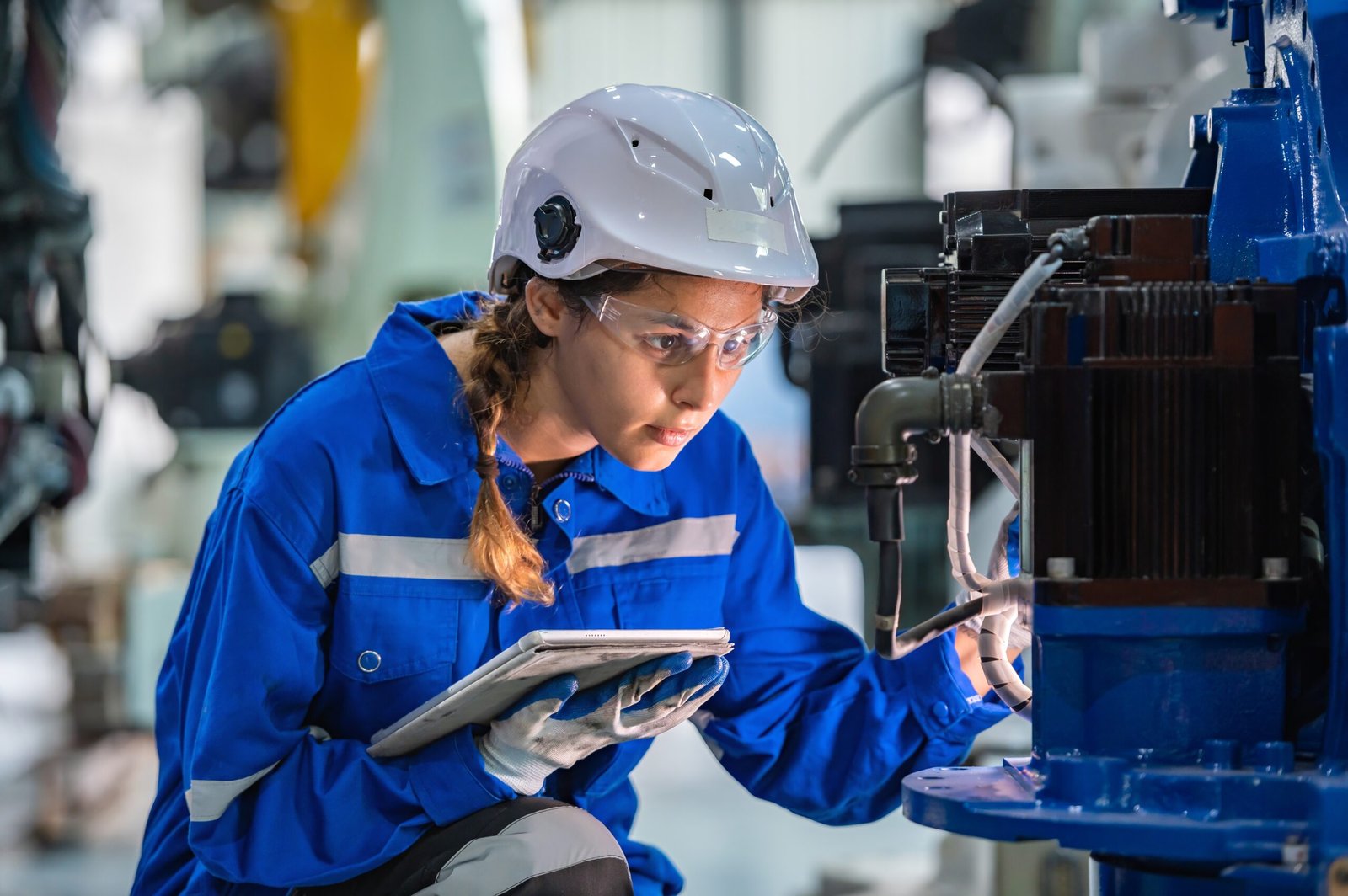
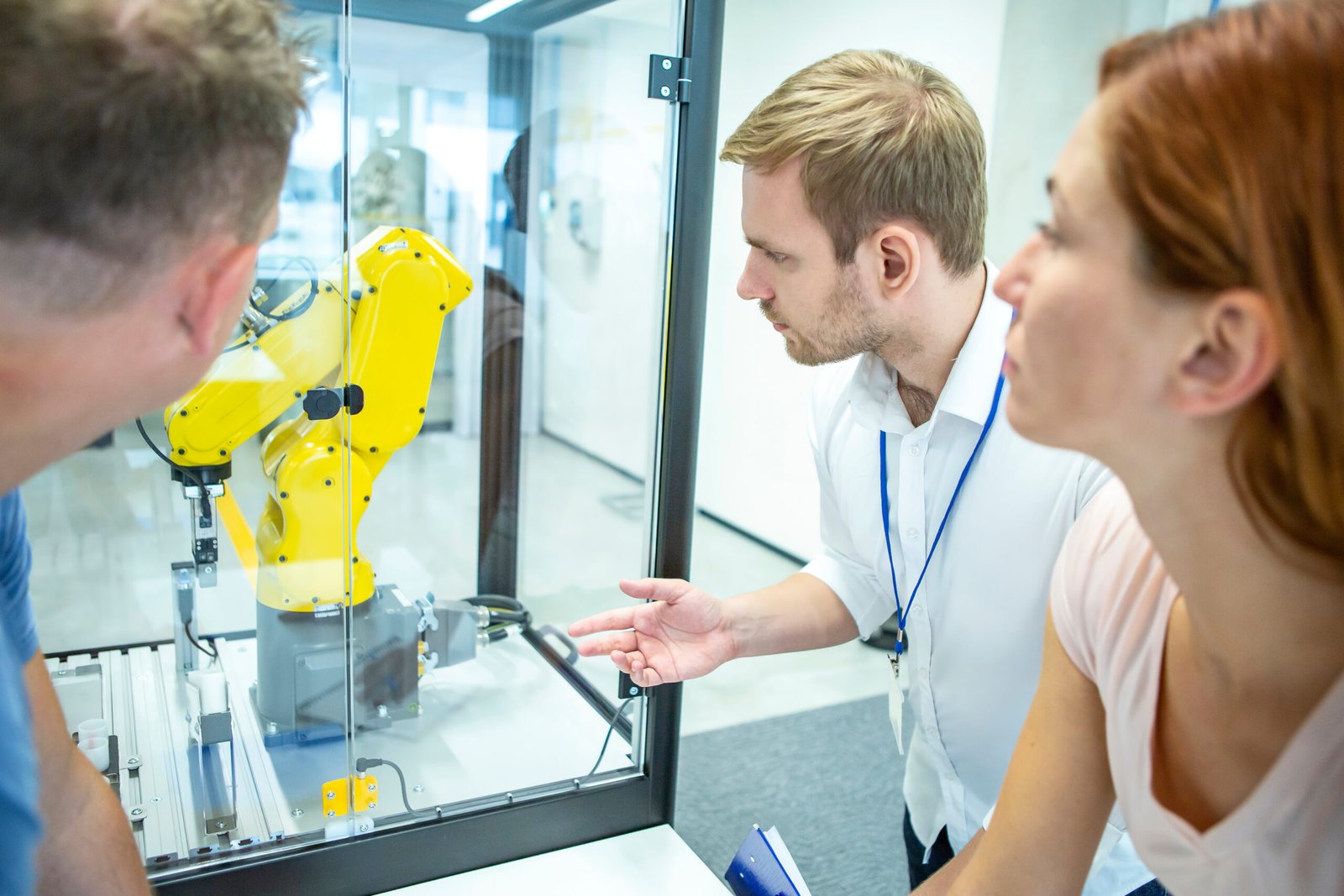
Fund your robotics integration through measurable operational improvements—turning your savings directly into repayment, with no heavy initial investments.










+1 602-449-1556
+1 602-449-1556
hello@roboticsintegration.com
We use your details only to answer your request, and we never sell or share your phone number. See our Privacy Policy and Terms of Service.
Greater Phoenix’s standard manufacturing cluster accounts for more than 57,000 jobs. Fabricated metal manufacturing is the largest subsector, with approximately 16,076 jobs, followed by food manufacturing at approximately 13,714 jobs. Nonmetallic mineral products, printing, furniture, plastics and rubber products, and wood products round out the standard-manufacturing base.
A separate advanced-manufacturing ecosystem estimate puts local employment near 100,000 jobs; another report cites roughly 150,000 total metro manufacturing jobs, about 77% of Arizona’s manufacturing employment, and more than 1,000 advanced-manufacturing and development operations employing nearly 80,000 people. Key sectors include semiconductors, microelectronics, aerospace and defense, biomedical and medical devices, electric and autonomous vehicles, batteries, and alternative energy. Semiconductor and electronic-component manufacturing alone accounts for approximately 24,590 jobs, with medical-equipment manufacturing at approximately 8,820, nonmetallic mineral products at approximately 8,140, and chemical and machinery manufacturing each at approximately 7,910.
Chandler is a named concentration point for semiconductor production, home to Intel fabrication facilities; Greater Phoenix Economic Council identifies four operating Intel fabs and two additional leading-edge fabs under construction, together employing more than 12,000 people locally. North Phoenix hosts Taiwan Semiconductor Manufacturing Company’s Fab 21 campus, where one of six planned fabs was operational and a second had completed construction as of the cited update; TSMC describes its Arizona investment as having grown from an initial $12 billion to $165 billion. Amkor operates semiconductor-related facilities in the region. Other advanced-manufacturing employers named in state materials include Lucid Motors, LG Energy Solution, Purina, and Raytheon. The northwest Phoenix corridor is a further point of semiconductor-linked expansion, and the broader industrial market is reinforced by semiconductor suppliers, advanced-manufacturing users, and logistics users.
Arizona operates an OSHA-approved State Plan. The Arizona Division of Occupational Safety and Health, ADOSH, part of the Industrial Commission of Arizona, covers private-sector employers in place of federal OSHA. Robot cell design should still follow ISO 10218-1 and ISO 10218-2 for robot and system safety, along with RIA R15.06 guidance on risk assessment, guarding, and safety-rated controls.
Workforce and funding programs support this base. ReadyTechGo is a statewide partnership between employers and six community-college districts, built around the shared Automated Industrial Training program, available at Mesa Community College, Estrella Mountain Community College, Central Arizona College, Pima Community College, Coconino College, Mohave College, and Yavapai College. Arizona’s Future48 Workforce Accelerators, Semiconductor Technician Apprenticeship Initiative, and Community College Workforce Scholarship further support automation-related training. The Arizona Commerce Authority lists aerospace and defense, semiconductors, battery manufacturing, electric and automated vehicles, and medical devices as priority advanced-manufacturing industries.
Before a site assessment, have cycle-time targets, part drawings or CAD data, current floor-space layout, and utility specifications for power, compressed air, and network connections ready. Note production volumes and any cleanroom or traceability requirements tied to semiconductor or medical-device work. Local training pipelines, including ReadyTechGo and the Automated Industrial Training program, feed the technician staffing pool available to plants across the metro.
Typical project phases include site and application assessment, robot and end-effector selection, a safety risk assessment aligned with ISO 10218 and RIA R15.06, integration and programming, installation, commissioning, and operator or maintenance training.
We also serve Robotics Integration in Seattle, Robotics Integration in San Francisco, Robotics Integration in San Jose, Robotics Integration in Sacramento and Robotics Integration in Fresno — or browse all service areas.

602-449-1556


